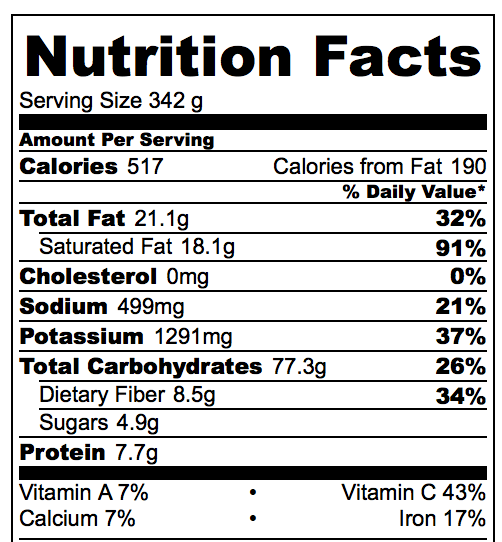
Serving Size & Serving Per Container
Serving size is based on the amount of typically eaten during one sitting. All facts on the nutritional label are based on serving size.
Serving Per Container is the total amount of serving in the entire package. So, if the package contains two servings per container, multiply the nutritional facts by 2 to get the facts for the whole package.
Calories
Calories are the total calories or “energy” in one serving. Generally, 100 calories per serving is moderate and 400 calories per serving is high.
% Daily Value
% Daily Value is based on a 2,000-calorie diet. This section tells you how the nutrients in one serving of the food contribute to your total daily diet.
Total Fat
Saturated Fat, Trans Fat and Cholesterol can increase certain diseases. Try to keep these nutrients as low as possible. 5% or less is low. 20% or more is high.
Total Carbohydrate
Total Carbohydrate is one of three macronutrients in food that provide calories, or “energy,” for the body. Each gram of carbohydrate provides 4 calories.
Dietary Fiber
Dietary Fiber will make you feel full longer if you eat foods with more dietary fiber
Sugars
Sugars are the smallest and simplest type of carbohydrate. They are easily digested and absorbed by the body. Foods with more added sugars provide empty calories that can increase your daily intake and provide very little nutrition, so try to select foods with fewer added sugars.
Protein
Protein is important for growth and development, and is one of three macronutrients in food that provide calories, or “energy” for the body. Each gram of protein provides 4 calories.
Vitamins
Vitamins and minerals are required by the body in relatively small amounts and support many body processes. Other vitamins, like vitamin A, vitamin C, calcium and iron, are listed below the thick black bar on the Nutrition Facts label. Choosing foods that are more nutritious, will make it easier for you to build a strong, fit and healthy body.
There is a more in depth look at nutrition labels here.
 Healthy Me!